After reading and researching for months, and seeing a gynecologist who confirmed that I suffer from sanitary-pad allergy, I now know the root of the monthly problems that I have been encountering.
It's the sanitary pads.
Without. A. Doubt.
So what solutions are there for this problem?
Natural Menstrual Choices
'
The average woman in Western society will throw away 10,000 to 15,000 disposable pads or tampons in her life!'
Isn't that a scary figure? Imagine the amount of chemicals that has been absorbed into the system! And then we wonder why more and more younger people are getting the old people's diseases.
1. Cloth Pads
Reusable and washable cloth pads have been making a comeback of late. It is economical, chemical-free BUT not hassle free (in my opinion). It has to be washed!!!! Though in the long run, it is good for the environment ecologically-wise.
Reusable pads usually come in two-parts; which is a
liner and a
liner holder. The liner goes on the inside of the holder. The holder has wings which snaps (with buttons) around the crotch of the underwear to keep it in place.
Before I 'converted' to 'cave-age-rags-for-menses', I experimented with some organic cloth panty shields from an organic shop called Justlife.
My high school good friend forwarded me a website which sells cloth pads. And this shop is in Taman Tun, KL. Here is their website. They do house deliveries too. I bought all my cloth pads from this outlet in Taman Tun.
click on
Mama Patch to view cloth pads
click on
Momiji to view more on cloth pads
2. Chemical-Free Tampons & Disposable Pads
This is very pricey as they are chlorine-free, bleached-free and the cotton which is used is organic cotton. Thus, it has no pesticide or insecticide residue.
A box of 20 pads can cost almost RM30!
Natracare is the brand that I have been buying to be used on heavy days.
It looks like this:
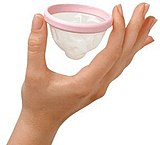
3. Menstrual Cups
These are similar to tampons in the sense that you have to insert them into the vagina.
According to the
Keeper's website, it does not cause the Toxic Shock Syndrome as it does not absorb the menstrual blood. It only collects the blood.
This is reusable and can last for 5 to 10 years if well taken care. All one has to do is to wash it after every use. The use of chemicals and boiling in hot water is not necessary at all.
There is also the one-use-disposable menstrual cup.
click on
Softcup to view more.
4. Sponges
*** Sea sponges are a natural alternative to tampons that come in different sizes to absorb varying amounts of menstrual flow. On average they cost between $8-15 dollars (each). These are not the same sponges that you might buy in a grocery store to wash dishes with. Sea sponges are actually harvested from the ocean floor and contain no synthetic materials. They are not sterile, however. One sea sponge will last about 6 months, but some may not last as long. A menstrual sea sponge should be thrown away and replaced if you notice that it rips apart while you are inserting or removing it from your vagina. You should follow the instructions that come with the product. Before using a sea sponge, you’ll have to dampen it, squeeze it tightly in your hand, and then gently insert it into your vagina. Once in place, it works like a tampon to absorb menstrual flow.
A sea sponge needs to be rinsed out about every 3 hours and thoroughly cleaned and dried and properly stored at the end of each menstrual cycle. Care must be taken to remove the sea sponge to avoid tearing it. In the 1980s, the FDA (Federal Drug Administration) found that some sea sponges marketed as menstrual products contained potentially harmful bacteria. One sea sponge manufacturer (Sea Pearls™) offers ways to disinfect their product. As with tampons, it is possible to get toxic shock syndrome from sea sponges.
Click on
sea-sponge to view more.
Harvesting sea sponges can be damaging to the ecological system.