Friday, 11 May 2012

Salmon Rice Balls

Ingredients:

1. 3 cups of sushi rice

2. 300gm of salmon

3. 1/2 teaspoon of sea-salt

4. *Sesame seeds (optional)

--------------------------------------

1. Boil the sushi rice.

2. Bake the salmon in the oven at 220C for 20 minutes.

3. Once the salmon is done, debone the salmon.

4. Once the sushi rice is done, mix the deboned salmon, the sea-salt and the sushi rice together until they are well blended.

5. Tear out a piece of cling-wrap which is the size of an A4 paper.

6. Scoop 2 tablespoons of the mixed rice and twirl the cling-wrap until the mixed rice becomes the shape of a ball.

7. If you can tolerate sesame seeds, you can add sesame seeds to the salmon rice balls.

Bon Appétit!


Thursday, 10 May 2012

Low-Salicylate Side Dish

I have loved chick peas since I was a child. My mom would buy packets of them, and I would eat them ALL BY MYSELF!!!! Haha!!

The ones sold outside have spices and curry leaves. Which is what makes them yummy! It's a different story now. Spices and curry leaves are definitely out but the chick-peas aren't.

So here is my low-salicylate recipe of home-made steamed chick peas!!!!

Ingredients:

1. 500gm of raw organic chick peas

2. 1 teaspoon of sea-salt

3. 3 cups of water

---------------------------------------------

1. Soak the chick peas overnight in the fridge. If you do not soak them overnight, you will end up with VERY hard chick peas.

2. Boil a pot of water and add the sea-salt in it. Add the chick peas and boil for about 2 hours (or until the chick peas soften).

3. Drain the water from the chick peas.

4. Serve them warm!

Bon appétit!

*YUMMY!*


Wednesday, 9 May 2012

Salicylate-Free Hash Brown

I am hungry just by typing this post! *drool*

Ingredients:

1. 1kg of old potatoes

2. 1 1/2 teaspoons of sea-salt (you can add extra if you want the hash brown to be more tasty)

3. 1/2 cup of all-purpose flour

4. 1 cup of sunflower oil

5. 3 large eggs.

----------------------------------------

1. Wash and peel the potatoes.

2. Grate the potatoes.

3. Drain off any excess moisture from the potatoes.

4. Add the all-purpose flour, eggs and salt to the grated potatoes and mix well.

5. Heat the wok and pour the sunflower oil into the wok when it is HOT!

6. Drop tablespoon sizes into the boiling oil. (*BE VERY CAREFUL OF BOILING OIL!)

7. Scoop up the hash browns by using a a drainer scoop.

8. Place them on paper towels to drain of excess oil.

9. Allow to cool. Eat them while they are still warm and enjoy the crispy sensation!

Bon appétit!


Tuesday, 8 May 2012

The S & F Words

* Do skip this post if you are a Puritan. You have been warned!

A few weeks ago, the moment my son got up the car after school, we had a conversation that went like this:

Joel: Mommie, teacher so and so said that we cannot use the S and F words in her class.

Me: Did teacher explain and tell all of you what the S and F words mean?

Joel: No.

Me: What if I said slow and fast?

Joel: HOR!!! I will teacher that you said the S and F words!!!!!

Haha!! Such innocence. It is only a matter of time before he finds out what they are.

I have been told that if I were to send Joel to a 'religious' school, he would then not be exposed to the 'cultures of the world'. Or keep him at home and home-school him and protect him from the onslaught of the world.

Which brings me to my next point.

Where do you think your children are going to work when they finish their studies? Lets not get ahead of ourselves. Where do you think they are going to pursue a degree? Mind you, many of the cultures of universities and colleges today consist of sex, parties, drugs and booze. Of course there are people who do not practice such ways of life. But there are a large number of students who do. And your children are bound to mingle with them.

What I am trying to say is that if your children have been over-protected all these years to the extend of not knowing what the S and F words are, imagine the shock they will get the moment they step out of their cocooned state of life.

It is all about balance. And by balance, I mean that they have to learn the good and the bad about this life on this planet. Unprotected sex when one is not ready is bad as unwanted pregnancies are a catastrophe. Abandoned babies, back-lane abortions, forced marriages which end up in divorce or abuse. But does this mean that we tell our children that all sex is evil? Drum it into their brain that sex is dirty and that hell awaits those who think of sex?

The world is changing. And we have to change with it. Little children as young as two years old are able to maneuver the iPad and iPhone better than any of their parents. Children are maturing at an even earlier age. The olden method which we were raised up with do not work anymore. The 'Because-I-said-so-because-I-am-your-father/mother' does not work anymore today. My son demands a precise explanation and if it defies logic, that's it. He will know that mommie or daddy is bull-shitting him.

It can be akin to carrying a large suitcase. As the child is too small to carry it, an adult will carry it for him/her UNTIL he/she is old enough to carry it on his/her own. So at this point of time, I will carry that baggage for Joel until he is deemed strong enough to carry it on his own. And if you disagree with me about how I raise him up, I got two words for you. Shut Up.

Life comes in a package. It consists of the good, the bad and the ugly. As Joel reaches a new stage, a new phase, I will release little nuggets of life to him so that he will be prepared to face the world which is many times, Full of Shit.

Damn!

I just said the S and F words again!!!


Monday, 7 May 2012

The Definition of Product Labels

How many times have you been misled to buy some product because the label claimed to be something you thought it to be? Upon closer inspection, the ingredients are a total opposite of what they advertised on the label!

Here are some of the common terms that we come across in our everyday products:

1. Fragrance-Free or Unscented

This is a general claim that implies that the product does not contain any fragrances. (click here)

In reality, fragrance-free or unscented products do contain artificial/natural fragrances OR masking agents to cover up existing smells of other chemicals or ingredients used in the products.(click here)

2. Hypoallergenic

This has very little meaning to it. (click here) In fact, this is a rather unregulated term!

Basically, sensitive people can still react to product(s) that has a hypoallergenic claim. It can also mean that allergy-causing ingredients are still present in the products, but they are used in smaller amounts!

Read hypoallergenic skincare for more information.

3. Ophthalmologist Tested/Dermatologist Tested

This actually means that an ophthalmologist or dermatologist tested the product. How it was tested and on how many people it was tested remains unclear.

An interesting link on dermatologically tested and clinically proven. Do read this!

4. Not Tested on Animals

This mean that the product(s) were not tested on animals. But this does not mean that the INDIVIDUAL ingredients of the products were not tested on animals. The 'Not Tested On Animals' movement was started by animal rights organizations stating that animals have an intrinsic right not to be used for experimentation.

What does this tell hypersensitive people like us about the product? Nothing!

5. Preservative-Free

Preservative-free products do not last long and they are of a greater risk in contamination. Preservative-free products would need to be refrigerated and thus consumers find them to be a great hassle.

Click here to read about 7 reasons there aren't more preservative free cosmetics.

An interesting link about preservative-free cosmetics.

So if you buy a product which states that it is preservative-free and yet it expires within 1 to 3 years, chances are that the manufacturer is lying!

6. Organic

The term organic means plants or natural materials have been produced by using methods that do not involve modern synthetic inputs such as synthetic pesticides and synthetic chemical fertilizers, do not contain genetically modified organisms (GMO), and are not processed using irradiation, industrial solvents or chemical food additives.


Transparency of labeling of products is very important because it helps people who are hypersensitive and people with allergies to identify the ingredients in products that they are sensitive to. By doing so, consumers can be safe.


Sunday, 6 May 2012

To Scent or Not To Scent - (Part 5) Fragrance-Free & Masking Agents

As I was researching for this series on perfumes and fragrances, I stumbled upon a scary discovery!

Fragrance-free DOES NOT MEAN fragrance-free!

Confused?

Let me explain to you what fragrance-free means.

FRAGRANCE-FREE or UNSCENTED products have an added chemical to MASK the smells of the other chemicals or fragrance in their products!!!

OH MY GOD!!!!

How ignorant I have been!

No wonder of late, the Simple shampoo has been irritating my nose and I could not figure out what it was!

Even though the masking agent(s) mask the smells of the other chemicals, they can still trigger a hypersensitivity attack as the chemicals are still in there. It is just that you don't smell it now, that's all.

Scary eh?

Of course I understand that there is no way we can completely avoid synthetic chemicals in our daily life. I am wondering on how to go about this fragrance-free and unscented products with masking agents.

Veratraldehyde

Veratraldehyede is an example of a masking agent.


The compound structure is structurally related to benzaldehyde. It is derivative of vanillin.

This is added to soaps, detergents and luxury perfumes as an odour-masking agent.

Veratraldehyde occurs naturally in champaca flower extracts, peppermint and raspberries. But it is commercially cheaper and thus almost all veratraldehyde used today is synthetic.

Not only it is used as a masking agent, it is used by perfumers as a fixative as it helps perfume linger longer on the skin or fabric.

Veratraldehyde's usage level is meant to be kept at or below 10% of a perfume's concentrate oil.

Veratraldehyde is also known as Methylvanillin, Veratric Aldehyde, Veratral, Veratryl Aldehyde, Veratrum Aldehyde, Vanillin Methyl Ether.


An interesting link.

Click here for more information on veratraldehyde.


Saturday, 5 May 2012

To Scent or Not To Scent (Part 4) - Perfume Hypersensitivity

Perfume has been used since the ancient of days. Many people are perplexed to why the big fuss over the use of perfumes and fragrances today. Many are outraged and ask, 'What is wrong in trying to smell good?'

During the ancient days, only 100% extract of plants and animals were used. No synthetics, no chemicals. 100% original. It is a different story today. Due to high cost, animal and plants being on the verge of extinction (because of the huge amount needed to FEED the mass market of perfume/fragrances), synthetic chemicals are needed to continually boost the perfume market. 

Perfume Hypersensitivity or 'Allergies'

Many people today have developed a hypersensitivity, an 'intolerance' or an 'allergy' to 'smells'. Particularly to perfume. And to these people, it never crossed their mind that their perfume/fragrance could be the one that is triggering their 'allergy' reactions. And sad to say, some are too addicted to their perfumes to give them up. And continue to live in denial and in sickness!

In order to prolong the shelf life of perfumes, preservatives are added to extend their shelf life. And many times, these preservatives are the culprits of perfume 'allergies'. 

Some 'allergy' reactions are even caused by the natural products that are in the perfumes!

Common 'Allergy' Causing Chemicals in Perfumes

1. Amylcinnamic Alcohol

This is very extensively used in women's perfume. It produces a jasmine-like 'floral-ness' when accompanied by more volatile chemicals of floral character. Assists in fixation for perfumes. It is known as a human immune system toxicant. It can cause contact dermatitis.

It is also known as:
* 1-heptanol, 2-(phenylmethylene)
* 2-amyl-3-phenyl-2-propen-l-ol
* 2-(phenylmethylene)-l-Heptanol 
* 2-benzylideneheptan-1-ol 
* 2-benzyliidene-1-heptanol 
* 2-pentyl-3-phenylprop-2-en-1-ol
* Alpha-amylcinnamic alcohol 
* Alpha-amylcinnamyl alcohol 
* Alpha pentyl cinnamyl alcohol 
* Amylcinnamic alcohol 
* Amylcinnamyl alcohol
* Buxinol 


2. Anisyl Alcohol


This is used in perfumery and it has a hawthorn ordour. It adds volume and also gives a natural aspect to floral compositions such as mimosa, lilac, cassia, apple-blossom, jasmine and heliotrope as well as to clover and fougere perfumes. 


It is also found in acid cleaners, fabric conditioners, antiperspirant, toiletries, fabric detergent liquid, soap, powder detergent and liquid bleach.


It is filed as a non-food allergy which can cause nausea, headache, breathing difficulty, hoarse voice, loss of voice, tingling lips, muscle pain, joint pain and etc. Some react in an anaphylactic reaction, some get asthma, abdominal pain, eczema or headaches. (click here)


3. Benzyl Alcohol


This is used as a solvent and preservative in perfumes. Benzyl Alcohol has been associated with contact allergy. When tests were conducted on lab rats, DNA damage was recorded. For more information click here.


4. Benzyl Salicylate


Since I am salicylate sensitive, I am going to highlight this in red. This is used as a solvent for synthetic musks as a fixative in floral perfumes such as jasmine, lilac and lily. There has been evidence that people can become sensitized to this material, thus has been given a Restriction Standard by the International Fragrance Association.

5. Cinnamic Alcohol

This has a distinctive ordour which is described as sweet, balsam, hyacinth, spicy, green, powdery and cinnamic. This is used in perfumery and in deodorants too.

Cinnamic alcohol has been found to have a sensitizing effect on some people and thus has been given a Restricted Standard by the Internal Fragrance Association.

6. Cinnamic Aldehyde

Cinnamic Aldehyde is a skin irritant. This is also used as a flavoring agent. For more information click here.

7. Coumarin

Coumarin has a distinctively sweet ordour which reminds people of freshly cut grass or hay. This has been used in perfumes since the late 1800s. For more information of Coumarin, click here.

Research shows that it could cause cancer. And it can trigger contact dermatitis. To read more about the side-effects of coumarin, click here.

8. Eugenol

Eugenol is used in perfumeries, flavorings, essential oils and in medicines as a local antiseptic and anesthetic.

Eugenol is hepatotoxic, which means it can cause damage to the liver. Kouros Eau de Toilette by Yves Saint Laurent contains Eugenol. People who have sensitivity to Eugenol should avoid this fragrance. Eugenol can cause contact dermatitis.

Click here for more information.

9. Geraniol

Geraniol is a monoterpenoid and an alcohol. It is the primary part of rose oil, palmarosa oil, and certain types of citronella oil. Geraniol also occurs in small quantities in geranium, lemon, and many other essential oils. It has a rose-like ordour.

For a detailed information on Geraniol, click here.

Geraniol can be found in facial moisturizer or facial treatment, hair colouring and bleaching, moisturizers, women's fragrance and anti-agine products.

People should avoid Geraniol if they have perfume allergy.

10. Hydroxycitronellal

This is a perfume ingredient with a medium strength floral scent which smells like lilly and sweet tropical melon. The two main components in Hydroxycitionellal are Citral and Geraniol.

It has been noted that Hydroxycitronellal above 5% concentration caused facial psoriasis and it is a documented irritant.

For more on Hydroxycitronellal click here.

11. Isoeugenol

Click here for the chemical make-up of Isoeugenol.

Isoeugenol is a substitute phenol.

It is known to cause contact dermatitis.

This is a very interesting link on the study that has been done on Isoeugenol.

12. Musk Ambrette


* Musk ambrette (2,6-dinitro-3-methoxy-4-tert-butyltoluene), a nitro-musk compound widely used as a fixative in fragrance formulations and found to a lesser degree in flavor compositions, produces hindlimb weakness when administered in the diet or applied to skin of rats for periods up to 12 weeks. Underlying neuropathologic changes consist of primary demyelination and distal axonal degeneration in selected regions of the central and peripheral nervous system. Murine neurological disease induced by musk ambrette occurs at doses well above estimated maximum daily human exposure. Lifetime experimental neurotoxicology studies using lower concentrations of musk ambrette for prolonged periods would be needed for the estimation of human risk.


* taken from neurotoxic properties of musk ambrette

Read contact and photocontact allergy to musk ambrette.

Apparently, this has been discontinued in the industry of perfumery. It is a banned product.

13. Sandalwood Oil

Read here for Sandalwood oil non-food allergy reaction.

Though Sandalwood oil is mild, it can cause severe allergy reaction when applied undiluted.

14. Wood Tars

* In a population of 1883 patients tested for allergic contact dermatitis (1985-1988), a prevalence of 5.4% (103 cases) was seen for wood tars (ICDRG allergen, 12% pet.) sensitization. In this group (n = 103), retrospectively, a combined allergy was seen to wood tars and fragrance mix in 43% and to wood tars and balsam of Peru in 31%. A combined allergy to wood tars and coal tar was seen in 19 patients (18.5%): 14 to liquor carbonis detergens (LCD), 8 to lianthral and 3 to both LCD and lianthral. Within the group with wood tars allergy (n = 103), a minority (n = 37) had a history of atopic dermatitis. Comparison of the test results in atopic and non-atopic subgroups (within the group of 103) revealed a higher incidence of combined wood tars-fragrance mix allergy in the atopic group (n = 37). In this group, a lower incidence of combined wood tars-coal tar sensitization was seen in comparison with the non-atopic group (n = 66). The authors believe that combined "wood tars-coal tar" allergy could be the consequence of cross-sensitization rather than due to long-term previous topical treatment with tar derivatives. The high % of cross-allergy between wood tars and fragrance mix emphasizes the role of wood tars as an important indicator allergen in perfume allergy.

* taken from wood tars allergy, cross-sensitization and coal tar


To Scent or Not To Scent (Part 3)

The Trinity of Perfume

In perfumery, notes are used to describe the scents that are sensed upon application. And here are the three types of notes.

They are the top notes (also known as head notes), the middle notes (heart) and the base notes.

Top Notes

The top notes are perceived immediately upon application of a perfume. These top notes consist of small and light molecules that evaporate very fast. Scents belonging to this group are described as 'fresh', 'assertive' or 'sharp'. It is the top notes that will capture the intended buyer's attention.

Commonly used scents in this group are ginger and citrus scents.

Middle Notes

The middle notes emerge when the top notes dissipate. The middle notes form the body of the perfume. Their role is to mask the often unpleasant initial impression of the base notes, which will become more pleasant as time passes by. The middle notes can kick into action anywhere from two minutes to 1 hour after application of the perfume.

Commonly used scents are lavender and rose scents.

Base Notes

The base notes appear when the middle notes dissipate. The function of the base notes is to bring depth and solidity to a perfume. The base notes are often made up of fixatives. They appear during the 'dry-down' period of a perfume.

Commonly used scents are musk scents.

Basic Types of Perfume

Alcohol is usually used as a liquid base for perfume. Basically the ratio of alcohol added to scented perfume concentrates will determine what the final concoction will be labeled as.

1. Parfum

This is also called 'extract' or 'extrait' and is totally undiluted. It contains the highest concentration of perfume oil which is between 15% to 30%! It can last for approximately six hours or longer and one drop is all it takes!

2. Eau de Parfum (EDP)

This consists of 7% to 15% of perfume concentrates. This is the most popular and common form of perfume.

3. Eau de Toilette (EDT)

This has around 1% to 6% of perfume concentrates. This is a lightly scented perfume which was supposed to used as a refreshing body splash to help people wake up in the morning! (Wake up INDEED!)

4. Eau de Cologne (EDC)

This has around 3% to 5% of perfume concentrates. This is mostly used after a bath.

5. After shave

This has the lowest perfume oil concentration of about 0.5% to 2%. This is used by men as a salve after shaving.

Interesting links:
Perfume Manufacturing
Perfume Glossary
Perfume Basics


Thursday, 3 May 2012

To Scent or Not To Scent (Part 2)

The History of Perfume

The art of making perfumes originated from ancient Egypt. But it was the Romans and the Arabs who developed and further refined the art of perfumery.

Though it was the Egyptians who were the first to discover perfume, Tapputi was the first ever recorded chemist from Mesopotamia who was a perfume maker.

In India, much of its fragrances were incensed based.

In Arab and Persia, through steam distillation was perfumery established and made popular.

Perfumery was made famous in the West by the Hungarians. The Hungary Water was the first ever alcohol-based perfume.


*France quickly became the European center of perfume and cosmetic manufacture. Cultivation of flowers for their perfume essence, which had begun in the 14th century, grew into a major industry in the south of France. During the Renaissance period, perfumes were used primarily by royalty and the wealthy to mask body odors resulting from the sanitary practices of the day. Partly due to this patronage, the western perfumery industry was created. Perfume enjoyed huge success during the 17th century. Perfumed gloves became popular in France and in 1656, the guild of glove and perfume-makers was established. Perfumers were also known to create poisons; for instance, a French duchess was murdered when a perfume/poison was rubbed into her gloves and was slowly absorbed into her skin.
Perfume came into its own when Louis XV came to the throne in the 18th century. His court was called "le cour parfumee" (the perfumed court). Madame de Pompadour ordered generous supplies of perfume, and King Louis demanded a different fragrance for his apartment everyday. The court of Louis XIV was even named due to the scents which were applied daily not only to the skin but also to clothing, fans and furniture. Perfume substituted for soap and water. The use of perfume in France grew steadily. By the 18th century, aromatic plants were being grown in the Grasse region of France to provide the growing perfume industry with raw materials. Even today, France remains the centre of the European perfume design and trade.
After Napolean came to power, exorbitant expenditures for perfume continued. Two quarts of violet cologne were delivered to him each week, and he is said to have used sixty bottles of double extract of jasmine every month. Josephine de Beauharnais had stronger perfume preferences. She was partial to musk, and she used so much that sixty years after her death the scent still lingered in her boudoir.*


* Taken from 'history of perfume'.

In England, perfume reached its peak during the reigns of Henry VIII and Queen Elizabeth I. It was said that all public places were scented during the reign of Queen Elizabeth as she had a very sharp nose which could not tolerate bad smells!

For more history on perfume, click here.


Wednesday, 2 May 2012

To Scent or Not To Scent (Part 1)

Per Fumus

Perfume has been been known to exist since the early civilizations.

The word 'perfume' is a derivative of the Latin word 'per fumus' which means through smoke. The people in ancient Egypt were the earliest people to discover perfume. And the use of perfume was in the form of burning of incense and aromatic herbs which were used in religious services. And the most frequently used ingredients were aromatic gums, grasses, frankincense and myrrh which were gathered from trees.

Kyphi, was a famous burnt incense. It is a very odorous mixture which comprised of cinnamon, cassia bark, the rhizomes of cypress and sweet flag, cedar, myrrh, frankincense, Matsic tree, juniper berry, seeds of fenugreek, pistachio and edible shoveler duck. These ingredients were crushed and mixed together with wine, raisins and honey. Not only was it used as an incense, it was also used as a potion and as a salve.

Perfume

In today's world, perfume is basically a mixture of essential oils or aroma compounds, fixatives and solvents used to give the human body, objects, and living spaces a 'pleasant smell'!

1. Essential Oils

Essential oil is a concentrated hydrophobic liquid which contains volatile aroma compounds from plants. Essential oils are also known as volatile oils, ethereal oils/aetherolea or just simply, 'oil of' the plant which they were extracted from. An example would be 'oil of lavender'.

Essential oil carries a distinctive scent or characteristic of the plant.

Generally, essential oils are extracted by distillation. Solvent extraction is another method in which the essential oil is extracted.

Essential oils are used in perfumes, cosmetics, soaps, for flavoring food and drinks, adding scents to incenses and household cleaning products. It is also widely used in aromatherapy.

2. Aroma Compounds

An aroma compound is a chemical compound that has an odour or smell. Aroma compounds are also known as odorant, aroma, fragrance or flavour.

In order for a chemical compound to have a smell or odour, the compound needs to be volatile in order for it to be transported to the sense of smell (olfactory system) in the upper part of the nose and it needs to be of a sufficiently high concentration in order to interact with one or more of the olfactory receptors.

Aroma compounds are found in food, wine, spices, perfume, fragrance oils and essential oils. Aroma compounds form biochemically during the ripening of fruits. Aroma compounds also form during the fermentation of wine.

Aroma compounds are also added to dangerous odourless substance such as propane, natural gas and hydrogen as a warning.

Many aroma compounds play a significant role in the production of flavourants, which are used in the service industry to flavour, improve, and basically used to increase the appeal of their products.

3. Fixatives

Fixatives are natural or synthetic substances used to reduce the evaporation rate and improve stability when added to more volatile components. By doing so, the final product will be able to last longer while the original fragrance is maintained. They are indispensable commodities to the perfume industry.

Some examples are ambergris, sandalwood, musk, vetiver, orris root and bergamot orange.

a. Ambergris


Ambergris is a solid waxy, flammable substance of a dull gray or blackish colour which is produced by the sperm whale's digestive system and is excreted out by regurgitation. A freshly produced ambergris has a marine, fecal ordour. But as it ages, it acquires a sweet, earthy scent which can be likened to the fragrance of rubbing alcohol (isopropanol) without the vaporous chemical astringency.

In the early times, ambergris is used as a fixative in perfumery. Because of the vulnerability of the sperm whale species, it was banned in the 1970s in many countries. Today, ambroxan, a synthetic which emulates the natural ambergris is used widely in perfumery.

b. Sandalwood


Sandalwood essential oils provide perfumes with a striking wood base note. But as a fixative, it is used in smaller proportions to enhance the head space of other fragrances.

Sandalwood trees are endangered due to over-harvesting, thus causing the natural oil to be very costly. Hence, Isobornyl cyclohexanol (ICBH) is the synthetic fragrance chemical produced as an alternative (and very much cheaper compared) to the natural sandalwood.

c. Musk

Musk is a class of aromatic substances used as base notes in perfumery. Musk was originally extracted from the gland of the male musk deer. Natural musk was used extensively in perfumery until the late 19th century. Musk is described to be earthy and woody and akin to the ordour of baby's skin.

Angelica archangelica or Abelmoschus moschatus are plants that produce musky smelling macrocyclic lactone compounds. These compounds are widely used in perfumery as substitutes for animal musk or to alter the smell of mixture of other musks.

Since the musk deer is an endangered species and obtaining musk from plants are costly, nearly all musk fragrance used in perfumery today are synthetic, which is sometimes called the 'white musk'.

Synthetic musk can be divided into three major classes:
* Aromatic nitro musks
* Polycyclic musk compounds
* Macrocyclic musk compounds

The aromatic nitro musks and polycyclic musk compounds are used extensively in the cosmetics and detergent industry. However, these two are known to contain carcinogenic properties. Thus, macrocyclic musk is deemed to be a better replacement.

An example of a polycyclic musk is the galaxolide which is found in laundry detergent to mask the smell of detergent chemicals. Galaxolide is also the aroma compound in laundry detergents which gives the washed laundry the 'clean scent'. Consumers today have been brainwashed to expect and demand that laundry detergents produce this 'clean scent'.

To read more on galaxolide, click here.

d. Vetiver

Due to its excellent fixative properties, vetiver is widely used in perfumes. It is contained in almost all of western perfumes (Lavania). Vetiver is a more common ingredient in men's fragrances such as Eau de Sauvage, Zizan by Ormonde Jayne and Vetiver by Occitaine.

e. Orris Root

Once upon a time, the Orris root was very important in the western herbal medicine. Today, it is mainly used in the perfumery as a fixative and base note. It is also widely used as a fixative in potpourri. The smell of Orris root is akin to the smell of violets.

f. Bergamot Orange

This fruit is not grown for consumption. The Bergamot peel is used in perfumery as it is able to combine itself with an array of scents to form a bouquet of aromas which complement each other. Many of the perfumes which are produced contain the bergamot essential oil.

An interesting thing to note is that the Bergamot contains extremely large amount of polyphenols!


4. Solvents

A solvent is a liquid, solid or gas which dissolves another solid, liquid or gaseous solute, resulting in a solution that is soluble in a certain volume of solvent at a specified temperature. The common solvent which is used in perfume is ethanol.


Tuesday, 1 May 2012

Anaphylaxis (YouTube)

I found a few interesting YouTube videos explaining about anaphylaxis.


This video below should be watched by everyone who works in the medical line!


Monday, 30 April 2012

Life = Driving in KV (Part 3 - The Top Ten Most Stupid Statements That Drivers Say)

Before you proceed to read this post, do click on the links below as these three posts are connected.

Life = Driving in KV (Part 1)

Life = Driving in KV (Part 2)

1. 'Why did you step on the brakes??!!!'
And this was said by the person who smashed into the car in front. In a situation where the cars were stuck in a bumper-to-bumper traffic jam.

2. 'Why did you not go??!!!'
This was said by a person who smashed into the car in front. In a situation where the traffic volume was at its highest at the round-a-bout. Thus, the the person who got smashed could not 'GO' as the 'smash-ee' claimed.

3. 'I thought your car was moving! Are you sure it didn't move?'
This was said by the person who smashed into the car in front. In a situation where traffic was at a stand-still.

4. 'Can we not go to that workshop to repair your car? I know a FAR cheaper one!'
This was said by the person who smashed into the car in front.

5. 'Oh, you mean the cross over the U-Turn logo means I can't U-Turn?'

6. 'But I DID signal! I signaled left and turned right!'

7. 'You should not have stepped on the brakes at all! If you didn't step on the brakes, this accident would not have happened at all!'

8. 'You should have avoided me!'
This was said after a collision that was caused by a reversing car on a busy highway!

9. 'Are you sure that my car banged into yours? Not your car banged into mine?'
WOW! I did not know that the law of inertia could be broken! You must be Isaac Newton the second!

10. 'If your car wasn't in front of mine, this accident would not have happened!'

'Google is working on self-driving cars, and they seem to work. People are so bad at driving cars that computers don't have to be that good to be much better.' - Marc Andreesen

'Have you noticed that anybody driving slower than you is an idiot, and anyone going faster than you is a maniac?' - George Carlin

'I had to stop driving my car for awhile... the tires got dizzy.' - Steven Wright

'You know, somebody actually complimented me on my driving today. They left a little note on the windscreen. It said, 'Parking FINE!' - Tommy Cooper


Sunday, 29 April 2012

Salicylate Part 4 - Cross Sensitivity


Definition of cross sensitivity:

A sensitivity to one substance that predisposes an individual to sensitivity to other substances that are related in chemical structure. Cross sensitivity with allergic reactions may develop between antibiotics of similar chemical structures.

The Penicillin and Cephalosporin antibiotics are cousins. Some people who are allergic to Penicillin may react to antibiotics from the Cephalosporin group.

Thus, it is the same where natural compounds in food are concerned.

People who are sensitive to salicylates, may develop sensitivity to natural benzoates and natural gallates. 

Food that contain natural benzoates are cinnamon, tea and berries.

Food that contain natural gallates are tea leaves, sumac, witch hazel, and oak bark. 

* However, food chemical intolerant individuals appear to react to a diverse range of plant derived aromatic chemicals, not merely to salicylates. This is called cross-reactivity and occurs when chemicals are similar enough in structure that they fire the same receptors in the body. What this range of chemicals have in common is that they exhibit the ability to interfere with arachidonic acid metabolism and prostaglandin production, and a tendency to increase inflammatory leukotriene production through the inhibition of cyclooxygenase (COX) I/II and/or the induction of lipoxygenase (LOX). Many of these chemicals also suppress the production of inducible nitric oxide synthase (iNOS). The group includes relatively strong COX II inhibitors like salicylates, and also weaker COX I/II inhibitors from a broad range of polyphenols and flavinoids. Even some carotinoids are weak COX II inhibitors that may affect those with extreme sensitivities (however vitamin A in the form of all-trans retinoic acid actually induces COX II enzymes). While salicylates act as selective COX II inhibitors, some polyphenols also inhibit COX I, an enzyme whose activity is required by the whole digestive system for normal function and protection. Other polyphenols simultaneously suppress COX I/II and LOX production. Though LOX induction is problematic and leukotrienes are involved in a number of food chemical intolerance syndromes such as asthma and eczema, COX inhibition in and of itself appears to be problematic too, as prostaglandins are responsible for regulating autonomic neurotransmitters and interact with dopamine in the brain.
Polyphenols that intolerant individuals probably also react to include the following COX inhibitors (not an exhaustive list):
  • Anthocyanidins
    • Cyanidin (cherries, berries)
    • Proanthocyanidins (chocolate, broad beans, nuts, wine)
    • Delphinidin (berries, wine)
  • Flavinoids
    • Hesperetin (citrus fruits, peppermint)
    • Naringenin (citrus fruits)
    • Apigenin (parsley, peppermint, thyme, salad vegetables)
    • Luteolin (thyme, parsley, peppermint, peppers, rosemary, citrus, leafy green vegetables)
    • Isorhamnetin (parsley, dill, chives, onions) Kaempferol (capers, dill, kale)
    • Myricetin (parsley, berries, broadbeans, tea, citrus)
    • Quercetin (capers, dill, buckwheat, cocoa, onions, peppers, berries)
    • Rutin (grapes, buckwheat)
  • Gallates and catechins
    • Catechin (broadbeans, fruits)
    • Epigallocatechin (broadbeans, tea)
    • Epicatechin (broadbeans, fruit, tea, wine)
    • Theaflavin (tea, buckwheat)
    • Gallates (tea)
  • Other polyphenols
    • Curcumin (turmeric)
    • Tannins (tea, coffee, wine, fruits, wild rice)
  • Carotinoids
    • Beta and alpha carotene
    • Lutein/zeaxanthin
  • Glycoalkaloids (nightshades e.g. potatoes, tomatoes, eggplant, capsicum, tobacco)
    • Solanine
    • Chaconine

* taken from http://failsafediet.wordpress.com


It has always been my belief to take everything I read with a pinch of salt. Before I came across these interesting facts on the Internet, I was already experiencing the 'sick' sensation whenever I came across certain smells. And some of those smells are not synthetic chemicals. 

Some of the smells from the list above that bother me are wine, citrus fruit (especially oranges), coffee and (occasionally capsicum). I was thinking that maybe the reason that I am not bothered by some of the smells above is that because they differ slightly in their chemical structures? I am not sure. 

Maybe any of you who have the same ailment as I do could share about what makes you sick and what are the things that you can tolerate? And if you have any good articles/websites, please feel free to share.


Friday, 27 April 2012

Container Garden - An Update


Siu Pak Choy harvest!
Kangkung!
Red Spinach!
A beautiful and colorful fly! The Long Legged Fly!

Stink Bug!

The mature Orange Dog caterpillar!
Look at the bottom part of the caterpillar and you will see it breathing!
Zucchini! Below is the first fruit!

Young Capsicum plant!
Cherry tomato flower buds! Fruits will be coming out soon!
Time to tear the Okra plants down. The worms are having a feast!
Parsley grown from cuttings! I DID it!! HAHA!! Well, how now Miss MCS? 
For those of you who are wondering what I am talking about, here is the link to MCS' blog post about Saint Evelyn who could not grow parsley.

Garlic chives grown from garlic bulbs.
Just look at the beautiful babies! 
I just discovered that I have been having composting machines in my pots and I did not even realize it.
This was one of the corn on a cob which I buried in my pot for composting. 2 weeks later, the whole thing has disintegrated and it is due to the GRUBS eating them! Look at the grubs all over the cob! Amazing! I have free composting machines. These grubs are the beetle bugs and not the Garden Soldier Fly grubs. 
 I checked another pot in which I buried 2 rotting lemons and one has completely disappeared! AMAZING!

More compost for the 'composting machines'!
Nai Pak seedlings. This veggie is my favourite!
Pink and Violet coloured Vinca and Periwinkle grown from seeds.


Wednesday, 25 April 2012

Salicylate Part 3 - Phenolic Acid


In my previous blog, I wrote that Salicylic Acid is a monohydroxybenzoic acid. This means that it is a type of phenolic acid and a beta hydroxy acid. To see my previous post click here.


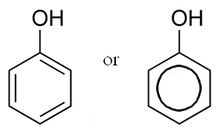
Phenol


Phenol, which is the parent compound of phenolic compounds is used as a disinfectant and for chemical synthesis. Phenolics are a class of chemical compounds consisting of a hydroxyl functional group (-OH) attached to an aromatic hydrocarbon group. The simplest of the class is phenol (C6H5OH). Some phenols are germicidal and are used in formulating disinfectants. Others possess estrogenic or endocrine disrupting activity. (click here)


Phenolic Compounds


Phenolic compounds are a large and diverse group of molecules which includes many different families of aromatic secondary metabolites in plants. These phenolics are the most abundant secondary metabolites in plants and can be classified into non-soluble compounds such as condensed tannins, lignins, cell-wall bound cell-wall bound hydroxycinammic acids, and soluble compounds such as phenolic acids, phenylpropanoids, flavonoids and quinones. All these groups are involved in many processes in plants and animals. (click here)


Phenolic Acid


Phenolic acid is a plant metabolite which is widely spread throughout the plant kingdom. Phenolic acid is essential for the growth and reproduction of plants. It is produced as a response for defending injured plants against pathogens. 

Natural Substances with Phenolic Acids

1. Propolis
The pharmacologically active molecules in the propolis are flavonoids and phenolic acids and their esters. These components have multiple effects on bacteria, fungi and viruses. In addition, propolis and its components have anti-inflammatory and immunomodulatory activities.

2. Coffee
Coffee is very rich in bound phenolic acids such as caffeic acid, ferulic acid and p-coumaric acid.

3. Purple corn maize

4. Quince

5. Aloe Ferox

6. Berries

7. Spices
Spices significantly contribute to the flavor, taste, and medicinal properties of food because of phenolics. Most spices contain phenolic acids such as tannic, gallic, caffeic, cinnamic, chlorogenic, ferulic and vanillic acids. A high amount of tannic and gallic acids are found in black mustard and clove. Caffeic, chlorogenic and ferulic acids are found in a good amount in cumin. Vanillic and cinnamic acids are found in onion seeds.

8. Dark Plum

9. Cherry

10. Apple (Valkea Kuulas)

11. Green & Black Teas

12. Horse Gram Beans

13.  Mushroom (Basidiomycetes species)

14. Chillli Peppers
Capsaicin which is the pungent compound. 

15. Herbs

16. Dried Fruits

17. Strong Smells/Aroma


18. Red Wine

Some Phenolic Compounds

BHT (Butylated Hydroxytoluene) - A fat-soluble antioxidant and food additive
Cresol - Found in coal tar and creosote
Estradiol - Estrogen (hormones)
4-Nonylphenol - A breakdown product of detergents and nonoxynol-9
Orthophenyl Phenol - A fungicide used for waxing citrus fruits
Porpofol - An anesthetic
Raspbery Ketone - A compound with an intense raspberry smell
Thymol - An antiseptic used in mouthwashes
Xylenol - Used in antiseptics and disinfectants

For a full list of phenolic compounds click here.