A girl who survived death and was given a second chance at life, this blog is about life and on how to live a 'chemical+salicylate-free-life' in a 'chemical+salicylate world' to the best that she can.
Showing posts with label Yeast. Show all posts
Thursday, 14 April 2016
Thermomix Purple-Carrot Bread
Ingredients:
1. 85gm purple carrot (skin peeled)
2. 200gm water
3. 400gm organic high-protein strong bread flour
4. 30gm oil
5. 1/2 teaspoon yeast
6. A pinch of salt
7. 1 teaspoon of sugar
-------------------------------------------------------------
1. Place carrot into TMX jug and set 10seconds/speed 6.
2. Scrape down the sides of the jug.
3. Add 200gm of water and set turbo 2 seconds.
4. Add the sugar and the yeast.
5. Set 2mins/37C/Speed 1.
6. Add 400gm flour, salt and oil.
7. Knead for 3 minutes.
8. Set aside and allow it to rise/double in size. (*Wet your hands when handling dough.)
9. Line a loaf tin with baking paper. Knock the dough down and place the dough into the baking tin and allow it to rise again.
10. Preheat oven to 180C.
11. Bake for 25 minutes or until golden brown.
12. Set aside to cool before serving.
Bon appetit!
Tuesday, 4 August 2015
The ABCs - M is for Microbiome
Whether you like it or not, we humans are home to tens of trillions of microbes.
Beneficial & Non-Beneficial Foods
Microbiota
A microbiota is *"the ecological community of commensal, symbiotic and pathogenic microorganisms that literally share our body space".
*taken from HERE
**Our human body contains over ten times more microbial cells than human cells!
**taken from HERE
The microbes are made up of bacteria, fungi and protozoa.
The picture below shows the diversity of the microbes that live in and on us!
Their Function in Our Human Body
The microbes live in our gut, mouth, skin, and other mucosal surfaces of our bodies. Today, scientists have discovered that these microbes benefit us by digesting food, preventing disease-causing-pathogens from invading our body, synthesizing essential nutrients and vitamins and also responsible for sending certain signals to the brain!
Beneficial & Non-Beneficial Foods
Optimizing the gut flora by ingesting fermented food is the best choice one can make. Lassi, kefir, sauerkraut. natto, kimchi, yoghurt and miso are superb fermented foods to have.
Probiotics is another good source to optimizing the gut flora.
Antibiotics, on the other hand will destroy the microbes in our gut. It will not only destroy the bad guys, the good guys will be eradicated too. Consumption of animals that are fed with antibiotics are also known to to destroy the gut flora.
Sugar, as well as processed food are also detrimental to the gut flora. High consumption of sugar can alter the atmosphere of the microbiome by causing a high amount of yeast/fungal.
Human Microbiome Project
The Human Microbiome Project (HMP) was a project by the United States National Institutes of Health. Their goal was to identify and characterise the microorganisms which are found in healthy and diseased bodies.
It is still a very little understood subject.
But there have been some interesting discoveries.
Probiotics is another good source to optimizing the gut flora.
Antibiotics, on the other hand will destroy the microbes in our gut. It will not only destroy the bad guys, the good guys will be eradicated too. Consumption of animals that are fed with antibiotics are also known to to destroy the gut flora.
Sugar, as well as processed food are also detrimental to the gut flora. High consumption of sugar can alter the atmosphere of the microbiome by causing a high amount of yeast/fungal.
Human Microbiome Project
The Human Microbiome Project (HMP) was a project by the United States National Institutes of Health. Their goal was to identify and characterise the microorganisms which are found in healthy and diseased bodies.
It is still a very little understood subject.
But there have been some interesting discoveries.
- Microbes contribute more genes responsible for human survival than human's own genes. It is estimated that bacterial protein-coding genes are 360 times more abundant than human genes.
- Microbial metabolic activities, such as the digestion of fast are not always provided by the same bacterial species.
- Components of the human micro biome changes over time, affected by the patient's diseased state and medication. However, the micro biome eventually returns to a state of equilibrium. The composition of the bacterial types has changed though. ***
Click HERE to read more about our microbes.
Also click on The Human Microbiome for more information.
Do take the time to watch the YouTube video about our microbiome.
Also click on The Human Microbiome for more information.
Do take the time to watch the YouTube video about our microbiome.
Tuesday, 16 December 2014
The Gut - The Root of All Health (Part 2) : The Fungi-ed Gut
Did you know that we humans have a small amount of candida in our mouth and intestines?
And it has a function and a job!
It actually aids in the area of digestion and nutrient absorption.
The four known fungi in the gut flora are candid, saccharomyces, aspergillus and penicillium.
Candida
Though an overgrowth of candida will cause digestive problems, healthy levels of it are needed to maintain a proper nutrient absorption. It also protects the intestinal tract from infections.
Saccharomyces Boulardii (S. Boulardii)
This fungi functions like a probiotic in the body. It isn't a bacteria. This fungi is prescribed by doctors to patients to help their gut recover after a bout of diarrhoea. It actually helps regulate the intestines. It also protects the intestines from pathogens that can harm the lining of the intestines. Not only does it protect the intestines, it also regulate various functions of the immune system. It also keeps the intestinal barrier function in tip-top condition.
To find out more about this fungi, click on LINK.
An Overgrowth
Even though these fungi help with the digestion and the gut, an overgrowth of them will cause problems.
There are several reasons to how fungi can overgrow in the gut. They are:
1. A diet which is high in refined carbohydrates and sugar.
2. A high consumption of alcohol.
3. A very high-stressed lifestyle.
4. An intake(s) of antibiotics which killed too many of the good guys (good bacteria).
And it has a function and a job!
It actually aids in the area of digestion and nutrient absorption.
The four known fungi in the gut flora are candid, saccharomyces, aspergillus and penicillium.
Candida
Though an overgrowth of candida will cause digestive problems, healthy levels of it are needed to maintain a proper nutrient absorption. It also protects the intestinal tract from infections.
Saccharomyces Boulardii (S. Boulardii)
This fungi functions like a probiotic in the body. It isn't a bacteria. This fungi is prescribed by doctors to patients to help their gut recover after a bout of diarrhoea. It actually helps regulate the intestines. It also protects the intestines from pathogens that can harm the lining of the intestines. Not only does it protect the intestines, it also regulate various functions of the immune system. It also keeps the intestinal barrier function in tip-top condition.
To find out more about this fungi, click on LINK.
An Overgrowth
Even though these fungi help with the digestion and the gut, an overgrowth of them will cause problems.
There are several reasons to how fungi can overgrow in the gut. They are:
1. A diet which is high in refined carbohydrates and sugar.
2. A high consumption of alcohol.
3. A very high-stressed lifestyle.
4. An intake(s) of antibiotics which killed too many of the good guys (good bacteria).
Friday, 1 August 2014
Sugar Butter Buns
Ingredients:
1. 270gm of organic strong bread flour
2. 30gm of organic all-purpose flour
3. 5gm of fine sea-salt
4. 2 teaspoons of instant yeast
5. 30gm of sugar (optional)
6. 50gm of unsalted butter
7. 100ml of milk
8. 2 eggs
9. 100ml of water
For the buns' topping:
1. 100gm of butter
2. 50gm of granulated sugar
---------------------------------------------------
1. Whisk together the eggs, water and milk in a bowl.
2. In a large mixing bowl, pour the flours, sugar, yeast and salt. Mix them.
3. Make a well in the centre of the flour mixture and pour in the wet mixture.
4. Mix everything together and knead the dough.
5. Incorporate the butter into the dough and fold and knead until dough is soft, pliable and smooth (about 15 to 20 minutes).
6. If the dough is sticky, add a bit of flour and continue kneading.
7. Put the dough aside and let it rise for an hour.
8. Knock the risen dough down and knead again.
9. Line a baking tray with baking paper.
10. Preheat oven at 180C.
11. Break the dough into 12 small round pieces.
12. Flatten the little pieces of dough and let them rise.
13. Slit all 12 pieces of dough and place pieces of butter in the slits. Sprinkle the granulated sugar over them.
14. Bake for about 20 minutes or until golden brown.
15. Allow to cool before serving.
Bon appétit!
1. 270gm of organic strong bread flour
2. 30gm of organic all-purpose flour
3. 5gm of fine sea-salt
4. 2 teaspoons of instant yeast
5. 30gm of sugar (optional)
6. 50gm of unsalted butter
7. 100ml of milk
8. 2 eggs
9. 100ml of water
For the buns' topping:
1. 100gm of butter
2. 50gm of granulated sugar
---------------------------------------------------
1. Whisk together the eggs, water and milk in a bowl.
2. In a large mixing bowl, pour the flours, sugar, yeast and salt. Mix them.
3. Make a well in the centre of the flour mixture and pour in the wet mixture.
4. Mix everything together and knead the dough.
5. Incorporate the butter into the dough and fold and knead until dough is soft, pliable and smooth (about 15 to 20 minutes).
6. If the dough is sticky, add a bit of flour and continue kneading.
7. Put the dough aside and let it rise for an hour.
8. Knock the risen dough down and knead again.
9. Line a baking tray with baking paper.
10. Preheat oven at 180C.
11. Break the dough into 12 small round pieces.
12. Flatten the little pieces of dough and let them rise.
13. Slit all 12 pieces of dough and place pieces of butter in the slits. Sprinkle the granulated sugar over them.
14. Bake for about 20 minutes or until golden brown.
15. Allow to cool before serving.
Bon appétit!
Tuesday, 5 June 2012
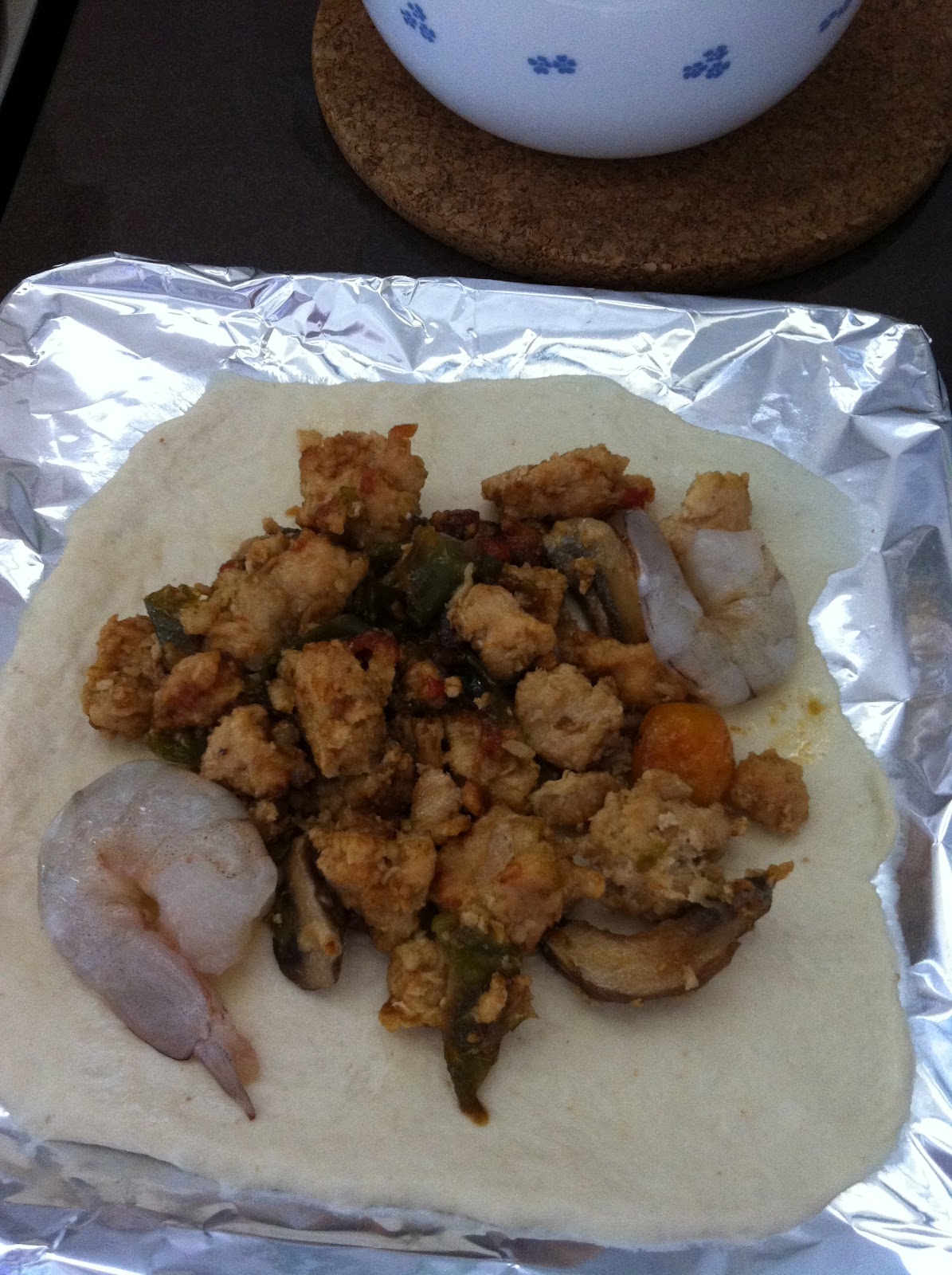
Very-High-Level-Salicylate Home-Made Pizza
Ingredients:
For pizza topping:
1. Traffic-light colored (red, yellow, green) capsicums (3) - very high in salicylate
2. 3 large tomatoes - very high in salicylate
3. 1 big onion - moderate in salicylate
4. 200g fresh mushrooms - moderate in salicylate
5. 200g minced chicken (marinade with sea-salt)
6. 1 teaspoon sea-salt
7. 2 tablespoons sunflower oil
For pizza base:
1. 500g organic high-protein bread flour
2. 1 packet of instant yeast
3. Sea-salt
4. Brown sugar
5. 1/2 cup sunflower oil
6. 1 cup of warm water
--------------------------------------
1. Before you prepare the pizza topping, prepare the base first.
2. Pour the pizza base ingredients into a large bowl and mix them thoroughly.
If you can tolerate cheese, you can sprinkle some cheese over the pizza topping just before baking it. Mine was cheese-free.
For pizza topping:
1. Traffic-light colored (red, yellow, green) capsicums (3) - very high in salicylate
2. 3 large tomatoes - very high in salicylate
3. 1 big onion - moderate in salicylate
4. 200g fresh mushrooms - moderate in salicylate
5. 200g minced chicken (marinade with sea-salt)
6. 1 teaspoon sea-salt
7. 2 tablespoons sunflower oil
For pizza base:
1. 500g organic high-protein bread flour
2. 1 packet of instant yeast
3. Sea-salt
4. Brown sugar
5. 1/2 cup sunflower oil
6. 1 cup of warm water
--------------------------------------
1. Before you prepare the pizza topping, prepare the base first.
2. Pour the pizza base ingredients into a large bowl and mix them thoroughly.
2. Sprinkle some flour on the counter top and knead the dough until smooth.
3. Place the dough back into the large bowl, cover with a damp cloth and leave aside for about 2 hours for it to rise. (While waiting for the dough to rise, cook the pizza topping)
4. Knock the dough back down and knead again for about 5 to 10 minutes.
5. Divide the dough into 4 balls.
6. Roll the balls flat with a roller.
------------------------------------
1. Wash the capsicums and tomatoes.
2. Slice the capsicums into thin slices and cut the tomatoes into 4 quarters.
3. Slice the big onion and fresh mushrooms into thin slices.
4. Heat the wok or pot and pour the sunflower oil into it.
5. Add the capsicum and big onion and fry until slightly soften.
6. Add the minced chicken, tomatoes and mushrooms and fry until chicken is cooked and vegetables are softened. Season with sea-salt. Stir again.
7. Set aside.
-------------------------------
1. Preheat oven at 210C.
2. Add the cooked toppings onto the pizza base.
3. Cook for 25 minutes or until slightly browned.
4. Allow to slightly cool before serving.
Bon appétit!
![]() |
| I also made a sea-food pizza! |
Tuesday, 15 May 2012
Salicylate-Free Mini Buns
I deleted the previous post by accident, so here it is again!
Ingredients:
1. 1kg of organic high-protein bread flour
2. 1/2 cup of sunflower oil
3. 1 teaspoon of sea-salt
4. 1 packet of instant yeast
5. 1 cup of warm water
6. 1 teaspoon of cane sugar
--------------------------------------------------
1. Pour all ingredients into a large bowl and mix them thoroughly.
2. Sprinkle some flour on the counter top and knead the dough until smooth.
3. Place the dough back into the large bowl, cover with a damp cloth and leave aside for a out 2 hours for it to rise.
4. Knock the dough back down and knead again for about 5 to 10 minutes.
5. Divide the dough into small, round balls.
6. Place them on baking trays and allow them to rise.
7. Preheat oven at 200C.
8. Bake mini buns for about 20 minutes or until slightly browned.
9. Allow mini buns to cool on trays.
10. Serve them warm with butter!
Bon appétit!
Ingredients:
1. 1kg of organic high-protein bread flour
2. 1/2 cup of sunflower oil
3. 1 teaspoon of sea-salt
4. 1 packet of instant yeast
5. 1 cup of warm water
6. 1 teaspoon of cane sugar
--------------------------------------------------
1. Pour all ingredients into a large bowl and mix them thoroughly.
2. Sprinkle some flour on the counter top and knead the dough until smooth.
3. Place the dough back into the large bowl, cover with a damp cloth and leave aside for a out 2 hours for it to rise.
4. Knock the dough back down and knead again for about 5 to 10 minutes.
5. Divide the dough into small, round balls.
6. Place them on baking trays and allow them to rise.
7. Preheat oven at 200C.
8. Bake mini buns for about 20 minutes or until slightly browned.
9. Allow mini buns to cool on trays.
10. Serve them warm with butter!
Bon appétit!
Sunday, 22 April 2012
Clay-Pot Rice Buns!
I thought of a new recipe this week. Thought I give it a try. And it was worth the try as it was so yummy, and delicious! I made buns that had clay-pot rice as fillings.
Here is the link for the salicylate-free clay pot rice.
BUN RECIPE
Ingredients:
1. Organic high-protein bread flour (500g)
2. Instant yeast (1 teaspoon)
3. A pinch of salt and brown sugar
4. A cup of warm water
5. 1/2 cup of sunflower oil
---------------------------------------------------------------
1. In a large bowl, pour the flour, yeast, salt, sugar, sunflower oil and water.
2. Mix them together until everything is well blended.
3. Knead the dough for 15 minutes and set aside for 2 hours for it to rise.
4. Cover the large bowl with a damp cloth.
5. After 2 hours, knock the dough down and knead again.
6. Cover with damp cloth and leave aside for another 45 minutes.
7. Knock the dough down again and divide the dough into 8 round balls.
8. Flatten each ball with a rolling pin.
9. Place 2 tablespoons of clay-pot rice, bring the edges together and seal the bun securely. (You do not want the fillings to spill out during baking time!)
10. Place buns in pre-heated oven (200C) and bake for 30 minutes or until buns are slightly browned.
11. Serve while warm.
Bon appétit!
Here is the link for the salicylate-free clay pot rice.
BUN RECIPE
Ingredients:
1. Organic high-protein bread flour (500g)
2. Instant yeast (1 teaspoon)
3. A pinch of salt and brown sugar
4. A cup of warm water
5. 1/2 cup of sunflower oil
---------------------------------------------------------------
1. In a large bowl, pour the flour, yeast, salt, sugar, sunflower oil and water.
2. Mix them together until everything is well blended.
3. Knead the dough for 15 minutes and set aside for 2 hours for it to rise.
4. Cover the large bowl with a damp cloth.
5. After 2 hours, knock the dough down and knead again.
6. Cover with damp cloth and leave aside for another 45 minutes.
7. Knock the dough down again and divide the dough into 8 round balls.
8. Flatten each ball with a rolling pin.
9. Place 2 tablespoons of clay-pot rice, bring the edges together and seal the bun securely. (You do not want the fillings to spill out during baking time!)
10. Place buns in pre-heated oven (200C) and bake for 30 minutes or until buns are slightly browned.
11. Serve while warm.
Bon appétit!
Subscribe to:
Posts (Atom)